

Expert Knob and Tube Wiring Services in Northeast Ohio
We Specialize in Residential Electrical Knob & Tube Rewires!
As a company, Connected Electrical Completes 2000-3000 projects each year, including 300+ full and partial knob & tube rewire installations.


Knob and Tube Rewiring
Most new and existing homeowners have an electrical project or two in mind they would like to have completed. While most are cosmetic in nature or luxury based, knob and tube wiring is not one of those projects.
In short, updating knob and tube wiring is a project that should be left to the pros. Read on for more details about knob and tube rewiring:
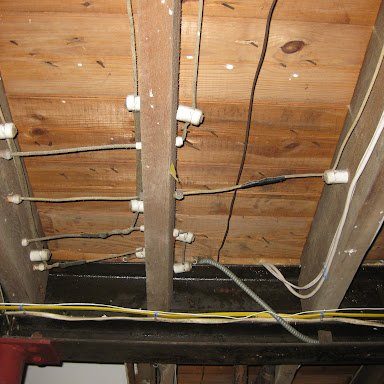

What is Knob & Tube Wiring?
Knob and tube wiring was a standard method of electrical wiring in buildings and homes that was commonly used throughout North America between the late 19th century (around 1880) and the 1940s. While it was considered state-of-the-art at the time, it has since become obsolete — though it remains in many older structures to this day. Knob and tube wiring is designed with insulated copper conductors that pass-through drill holes in lumber framing via porcelain insulating tubes that serve as protection.
Along the length of the wiring, nailed-in porcelain knobs support the wires. At the points where the wires enter an electrical device (a switch or a lamp, for example) or are pulled into a wall, they’re protected by rubber insulation or flexible cloth.
Since common household appliances back in the time of knob and tube wiring consisted of not much more than toasters, clothes irons, and electric tea kettles, the system wasn’t designed with a ground wire to handle many of the appliances that use three-prong plugs today–refrigerators, TVs, washers and dryers, and others. Knob and tube wiring can’t properly service any appliances or devices with three-prong plugs.
To address this issue, many knob and tube wiring systems were “modified” by inexperienced non-professionals so the wiring would support the loads required by major appliances. This resulted in many knob and tube wiring systems becoming susceptible to overloading.
As we mentioned, this type of wiring was utilized mainly between the 1880s and 1940s, though some structures built in the 1950s used it as well. It was after that when knob and tube wiring began getting phased out.
Is Knob and Tube Wiring a Fire Hazard?
It absolutely can be a fire hazard, though it also depends on the condition of the system. A major cause of fires that stem from knob and tube wiring is the insulation that surrounds the wiring. Additionally, the many improper modifications that people have attempted to make on their knob and tube wiring can be considered unsafe and a potential fire hazard.
Also, since this type of wiring does not have a grounding conductor, the risk of electrical fire and/or damage to electronic equipment increases significantly.
Household insulation in the walls of homes with knob and tube wiring can also lead to fires. In fact, the National Electrical Code 2008 requires that knob and tube wiring not be covered by insulation and that the system itself should not be in “hollow spaces of walls, ceilings, and attics where such spaces are insulated by loose, rolled, or foamed-in-place insulation material that envelops the conductors.”
Is Knob and Tube Wiring Legal?
Technically, yes, but only for homes that already had it installed. Much depends on where you live as well as the condition of the wiring system. No existing code requires the complete removal of knob and tube wiring, though some areas do require that it must be removed in all accessible locations; some don’t require removal but the system must be inspected for safety.
Additionally, knob and tube wiring is prohibited in any and all new construction. And though knob and tube wiring systems are not illegal, many insurance companies will not insure houses with this type of wiring because of the increased fire risk.
Can You Sell a House with Knob and Tube Wiring?
Yes, but keep in mind that any home inspector is going to make a note of the knob and tube wiring and disclose that to a prospective buyer. If the system has been properly maintained and is in good shape, selling your home shouldn’t be much of a problem.
However, that evaluation is best left to a qualified electrician who can confirm whether the system was installed and modified properly. If an electrician finds that the system has deteriorated (cracked or broken porcelain knobs or tubes, sagging and frayed wires, brittle wire sheathing, exposed live wires, etc.), they may recommend the system be repaired or even replaced as it is not legal to sell a home with faulty wiring.
This can impact real estate sales, as prospective buyers will more than likely demand either an updated electrical system or a significant reduction of the home’s asking price. And while it is not an inexpensive job, it is a wise long-term investment that dramatically reduces safety risks, makes a home more appealing to both buyers and sellers, and doesn’t scare away insurance companies.
How Much Does It Cost to Replace Knob and Tube Wiring and How Long Does it Take?
You may think that a whole house electrical rewire will be a painful, long, invasive experience, but the answer is, it doesn’t have to be and experience really counts! Connected Electrical employs several, highly trained, expert crews who can generally rewire a 1,500-2,500 square ft. home in roughly 7-10 business days and a 2,500-5,000 sq. ft. home in approximately 2-3 weeks.
A partial electrical rewire may start at around $7,500, while a full knob & tube rewire on a 1,500 sq ft house will typically ranges from $18,000 to $25,000 depending on a variety specific factors unique to your home, including whether the outside electrical service & main panel have been updated in the past.
What To Do If You Have Knob and Tube Wiring:
While knob and tube wiring is considered obsolete and potentially dangerous, it can still function quite well if properly serviced and maintained. If your home has knob and tube wiring, here are some tips to ensure it’s operating as it should:
- Have your system inspected as soon as possible by an experienced, licensed electrician at Connected Electrical. We’ll give the knob and tube wiring a thorough evaluation and determine whether repair or replacement is necessary. For example, if we find brittle or cracked wiring, we would likely replace that for safety and performance purposes.
- Avoid running too many appliances at once, as this increases the risk of fire.
- Do not use knob and tube wiring in bathrooms, kitchens, laundry rooms, or outdoors — these wires must be grounded for safe usage.
- Remove (or, better yet, have an electrician remove) any insulation surrounding knob and tube wires.
While some knob and tube systems are still in good enough shape to work well and without too much risk, most of these systems do need to be replaced because of improper modifications as well as insulation in the home.
Whether you’re buying or selling a home or looking to maintain, repair, or replace your current knob and tube wiring system, call Connected Electrical and we’ll take care of it.
Our expert team of licensed professionals has decades of experience working with, and upgrading, knob and tube wiring in Ohio. If you’re in the Greater Northeast Ohio area including Cleveland, Akron, Medina, Lakewood, Shaker Heights, Cleveland Heights, South Euclid or University Heights, get in touch with us today for a free onsite or virtual evaluation.
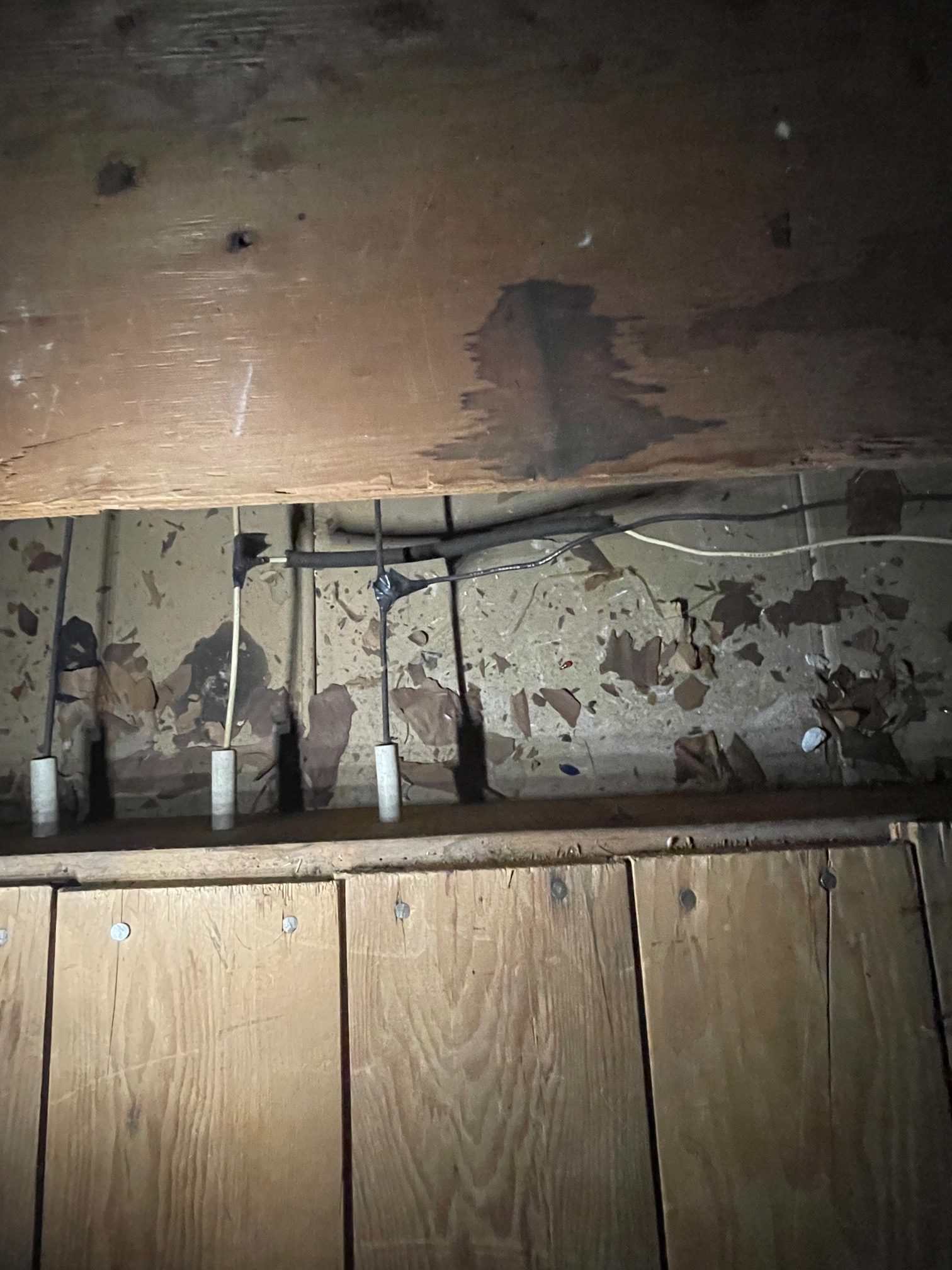
We had our entire house recently upgraded from old knob & tube wiring. Marc and his team of experts were wonderful from start to finish. Marc provided the initial estimate, planning, and work/payment schedule, and is extremely knowledgeable. Luke and Anthony were wonderful to work with as well. They worked diligently and cleaned up after each day, leaving the space spotless for us. Our project was very reasonably priced and the work was done a day early from the estimated time of completion. The office pulls all the permits and paperwork required to get your project done as well. I would highly recommend Connected Electric for anyone seeking a reliable and professional team of electricians. Thanks so much Marc and team!
— Erin (Mayfield Heights)